
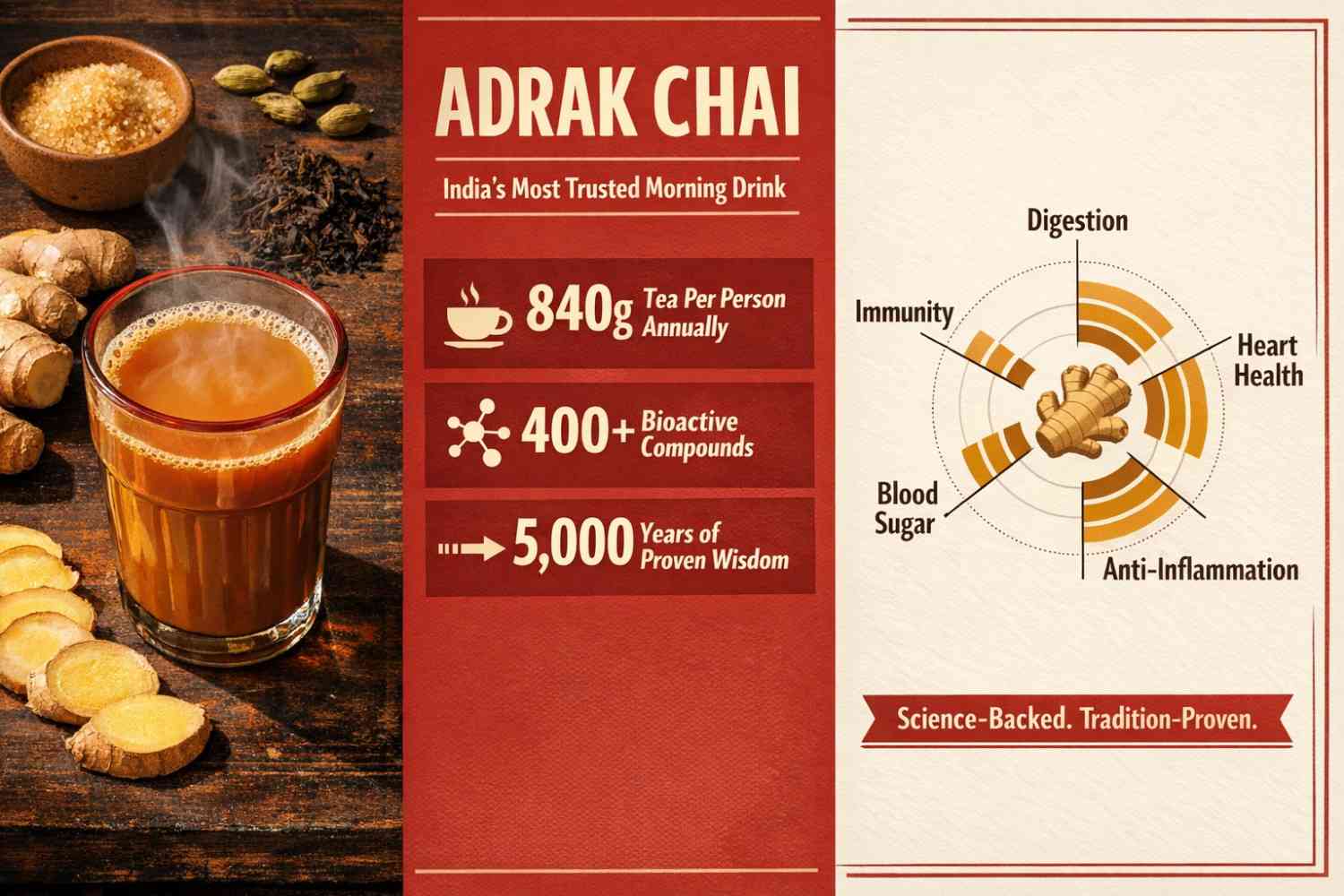
It is 5:47 in the morning. The kitchen light is the only one on in the house. You hear the sound before you smell anything: a piece of fresh ginger being pressed hard against the counter, crushed under a rolling pin, its sharp fragrance already filling the room before the milk even heats. Your grandmother is already two steps ahead of whatever ails you.
She did not know the word "gingerol." She had never read a clinical trial. But she knew, with the certainty of someone who has been right about this for fifty years, that a strong cup of adrak chai could settle a rough stomach before a big day, cut through the worst winter cold, and put your head back on straight before the rest of the house was even awake. She pressed it into your hands with both palms wrapped around the cup. She was confident in a way that only decades of being correct can make a person.
Here is the part that makes this story worth telling: the science has now caught up with her. Researchers at institutions including Johns Hopkins Medicine and the National Institutes of Health have spent years studying what makes ginger one of the most therapeutically powerful plants on the planet. Their findings, published between 2022 and 2025, line up almost perfectly with what Indian grandmothers have practiced for generations.
This is not a story about a trendy superfood. This is the story of why adrak chai has earned its place on every Indian morning table for more than 5,000 years, and why the rest of the world is only now beginning to understand it.
What is adrak chai? Adrak chai is a traditional Indian spiced tea brewed by simmering fresh ginger root in milk and water with tea leaves and sugar. It is one of India's most consumed beverages, with over 840 grams of tea consumed per person annually across India, according to a 2024 pilot study by the Tea Board of India.
The Science Behind the Sip: Meet Gingerol, Shogaol, and 400+ Compounds
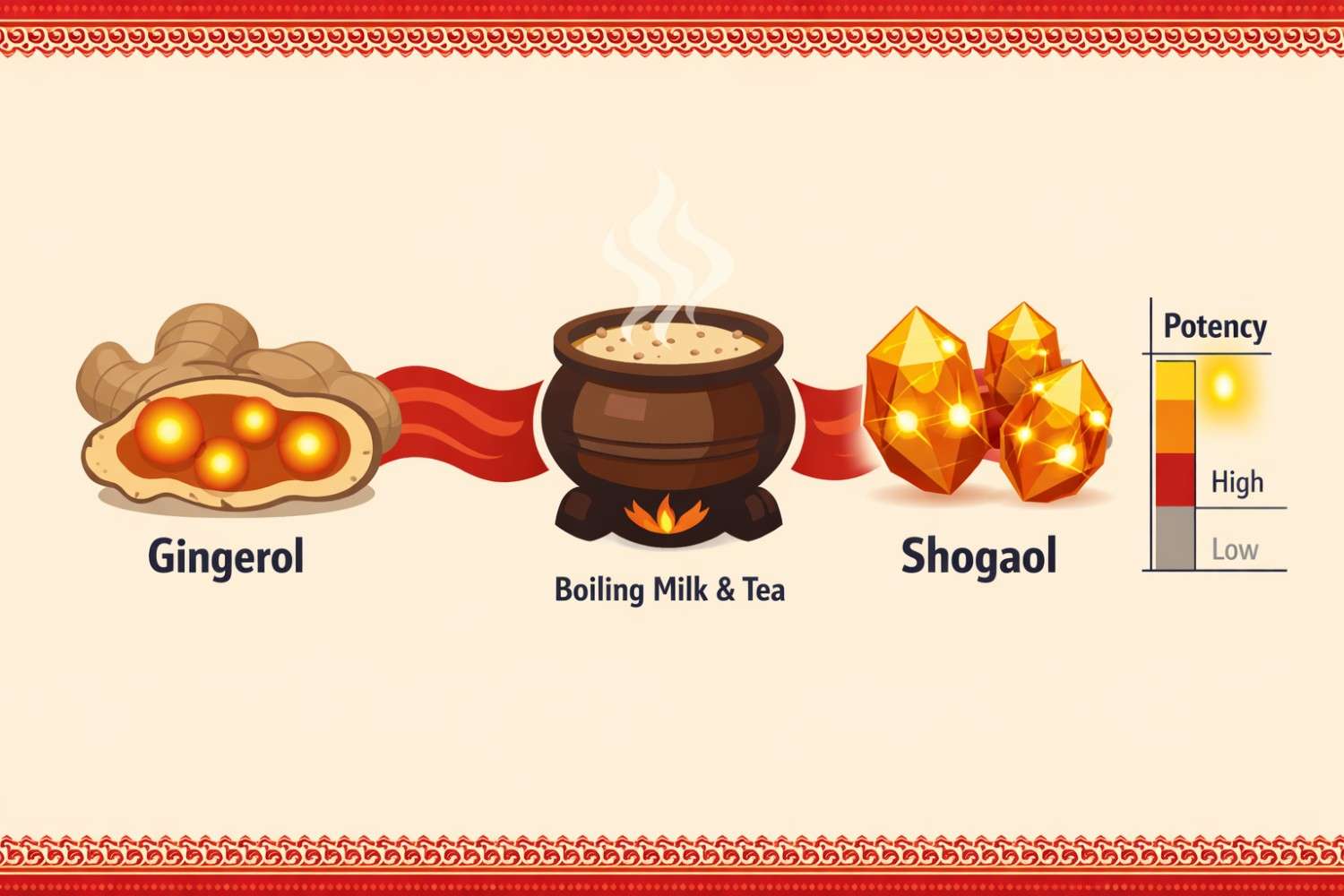
Here is the surprising truth about your morning cup: it is not ginger alone that makes adrak chai so effective. It is what happens to ginger when you boil it.
Fresh ginger contains a compound called gingerol, the primary active ingredient responsible for most of its medicinal properties. But when you heat ginger, the way every adrak chai recipe requires, gingerol converts into shogaols. According to the NIH's comprehensive review of ginger, shogaols are significantly more potent as anti-inflammatory agents than their precursor compound. This means boiled adrak chai is, biochemically speaking, more powerful than raw ginger or ginger supplements.
What most people don't realize: Ginger contains over 400 natural compounds, according to Johns Hopkins Medicine. The most therapeutically active are gingerol, shogaol, zingerone (anti-nausea, formed during cooking), and paradol (linked in early research to inhibiting DNA damage, per WebMD 2024). The act of simmering ginger in milk appears to activate the most beneficial forms of these compounds. That is not coincidence. It is 5,000 years of intuitive food science finally getting a laboratory explanation.
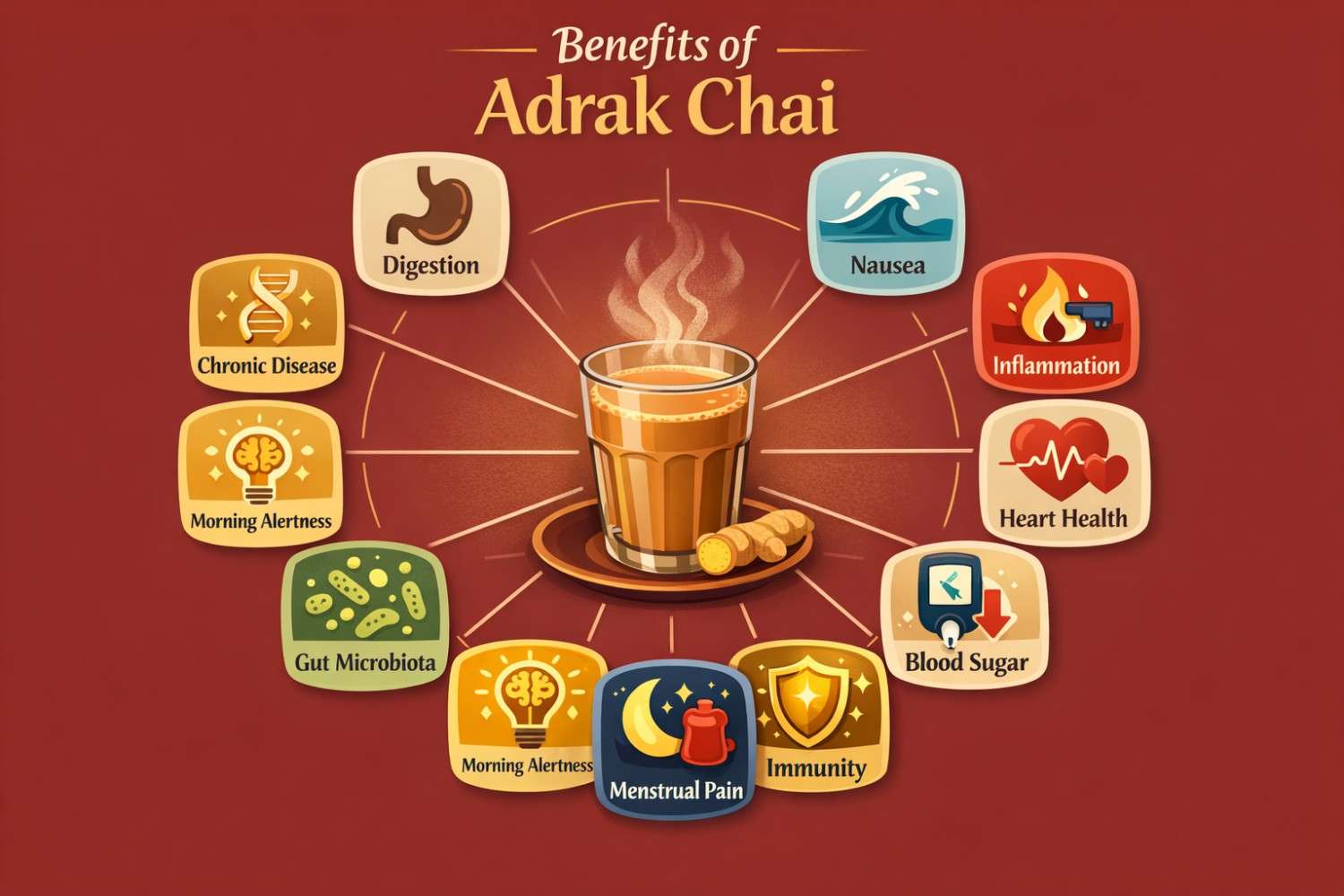
10 Proven Ginger Tea Benefits Backed by Science
Most websites give you a generic list. Here is what the 2024 and 2025 research actually shows, including the benefits that almost no Indian chai blog covers.
1. Settles Your Stomach and Improves Digestion
Johns Hopkins Medicine confirms that gingerol supports gastrointestinal motility, which is the rate at which food moves through and exits your stomach. A 2025 review in ScienceDirect found that ginger accelerates gastric emptying and improves overall digestive movement. A separate 2024 review confirmed ginger's ability to support people with IBS and IBD by easing food movement through the GI tract. If you have ever noticed that a cup of adrak chai after a heavy meal makes you feel lighter, now you know the mechanism behind it.
2. Fights Nausea Better Than Most People Expect
A 2022 meta-analysis on PubMed Central found that ginger supplementation significantly reduced nausea intensity compared to a placebo. The mechanism works through gingerols and shogaols interacting directly with serotonin receptors in the gut and brain, reducing the signals that trigger nausea. Clinical studies reviewed by WebMD (August 2025) confirm effectiveness for chemotherapy-related nausea, pregnancy morning sickness, and motion sickness.
3. Reduces Inflammation as Effectively as Some Painkillers
WebMD reports that ginger acts similarly to nonsteroidal anti-inflammatory drugs (NSAIDs) such as ibuprofen. In one clinical study of patients with knee osteoarthritis, ginger reduced pain on standing. A 2025 randomized controlled trial published in PMC tested ginger supplementation on inflammation and muscle soreness with statistically significant results. For a daily wellness habit that costs Rs.25 per cup, that is a meaningful return.
4. Supports a Healthier Heart
A 2024 Cleveland Clinic report highlighted that consuming 3 grams of ginger per day can reduce LDL ("bad") cholesterol, lower triglycerides, and improve blood flow. A 2022 review of 26 clinical trials on Healthline confirmed that ginger consumption significantly reduced triglycerides and LDL while also increasing HDL ("good") cholesterol. Ginger's antiplatelet properties may also reduce the risk of blood clots that contribute to heart disease.
5. Helps Manage Blood Sugar in People With Type 2 Diabetes
A 2023 UCLA Health study cited by Wellfitinsider found that gingerol improves insulin sensitivity and helps glucose enter cells more efficiently. Regular consumption may help stabilize fasting blood sugar levels and reduce insulin resistance. This does not replace medication, but it does make adrak chai a smart daily complement for blood sugar management when discussed with a doctor.
6. Boosts Your Immune System
Ginger has been used for thousands of years to treat colds, flu, coughs, and migraines, according to the NIH's herbal medicine review. The NIH formally classifies ginger as "Generally Regarded as Safe (GRAS)," which makes it one of the very few natural remedies to carry both traditional credibility and formal regulatory recognition. Drinking adrak chai during cold and flu season is not folk superstition. It is evidence-based self-care.
7. Relieves Menstrual Pain (The Benefit Nobody Talks About)
This one surprises most people. Research reviewed by Healthline (April 2025) suggests that ginger is as effective as mefenamic acid and ibuprofen in relieving menstrual pain (dysmenorrhea). Women across India have been drinking adrak chai during their periods for generations, almost by instinct. The clinical data now supports exactly why that instinct was correct.
Here is the surprising truth: This benefit is mentioned in almost no Indian chai content. Women who already drink adrak chai intuitively during their period now have the science to back up what they have always felt was right.
8. Supports Gut Health and May Help With Weight Management
A 2024 systematic review published in the Journal of Health, Population and Nutrition (PMC, June 2025) reviewed nine studies across PubMed, Scopus, and Web of Science and confirmed ginger's consistent positive impact on gut microbiota, with a direct focus on obesity prevention. Ginger appears to modulate the balance of gut bacteria in ways that support healthier metabolism. This is the most current research available, and almost no Indian food blog covers it yet.
9. Sharpens Morning Alertness (The Circulatory Angle)
Here is a connection most articles skip entirely. Ginger carries antiplatelet properties that support blood circulation throughout the body. Better blood flow to the brain supports clearer thinking and improved alertness in the morning. This is the physiological mechanism behind why so many Indians describe adrak chai as a "mental reset" before the day begins. The benefit is biologically grounded, even if it has rarely been spelled out in plain language.
10. May Protect Against Chronic Disease Over Time
Ginger's antioxidants help manage free radicals, which are compounds that can damage cells when their numbers grow too high, according to Johns Hopkins Medicine. WebMD (2024) notes that compounds including zingerone and paradol may inhibit DNA damage and cell mutations. Early research suggests regular ginger consumption may support long-term cellular health and help reduce the baseline inflammation that drives many chronic diseases.
Curious about what's in your cup? Yewale Amruttulya's Adrak Chai at just Rs.25 is brewed fresh at every outlet using a standardized recipe that keeps the taste and the benefits consistent, cup after cup. |
Why Your Boiled Adrak Chai Works Better Than a Ginger Supplement
The capsule on the pharmacy shelf has not been boiled. Your chai has. And according to the science, that difference matters.
As discussed above, boiling converts gingerol into shogaols, which are more potent anti-inflammatory compounds. Most ginger supplements use dried ginger at room temperature, where this conversion has not happened at meaningful levels. Adrak chai, brewed the traditional Indian way by simmering ginger in hot milk for several minutes, actively drives that conversion every single time.
What most people don't realize is that milk may also increase the bioavailability of ginger's active compounds by providing a fat medium that helps with absorption. The Indian practice of simmering ginger in milk is, from a biochemical standpoint, close to an optimal delivery method. Your grandmother was running an accidental pharmacology experiment every morning. The method she used was largely correct.
How Much Adrak Chai Should You Drink Each Day?
The NIH classifies ginger as GRAS (Generally Regarded as Safe) for daily consumption. Most health guidance points to up to 4 grams of ginger per day as a safe and effective range. One to two cups of adrak chai per day sits comfortably within that window for most healthy adults.
A few precautions worth knowing:
• Johns Hopkins Medicine notes that people on blood thinners like warfarin or aspirin should consult a doctor, as higher doses of ginger may interact with these medications.
• WebMD (August 2025) advises pregnant women to consult their doctor before significantly increasing ginger intake.
• Some people experience mild bloating at higher doses. This is uncommon at the 1 to 2 cup per day level.
For the vast majority of healthy adults, one to two cups of adrak chai in the morning is both safe and beneficial.
Adrak Chai vs. Other Popular Morning Drinks: A Quick Comparison
Here is how adrak chai stacks up against the other drinks competing for your morning routine:
| Morning Drink | Anti-Inflammatory | Digestive Support | Natural Energy | Immunity Boost | Avg. Cost in India |
| Adrak Chai | Strong (NIH, Johns Hopkins) | Strong (gastric motility) | Moderate (caffeine + circulation) | Strong (NIH GRAS) | Rs.20 to Rs.30 |
| Regular Coffee | Mild | Mild (can irritate gut) | Strong (high caffeine) | Minimal | Rs.30 to Rs.80 |
| Plain Green Tea | Moderate | Moderate | Low to moderate | Moderate | Rs.20 to Rs.40 |
| Plain Warm Milk | None significant | Moderate | Low | Moderate (calcium) | Rs.15 to Rs.25 |
Adrak chai leads on anti-inflammatory and immunity dimensions, at a price comparable to or lower than most alternatives. The combination of bioactive compounds, cultural habit, and accessibility makes it difficult for any other morning drink to match on a per-rupee basis.
Want a morning drink that delivers on all fronts? Find your nearest outlet and start your mornings the right way. |
What If Your Morning Chai Could Also Pay Your Bills?

India's tea market was valued at USD 11.86 billion in 2025, according to IMARC Group. By 2034, that number is projected to reach USD 15.44 billion. The Tea Board of India's 2024 pilot study found that over 90% of Indians drink tea before or with breakfast, with per capita annual consumption at 840 grams nationally and 925 grams in urban India. This is not a market that slows down during a recession. People are going to have their chai regardless.
This context matters for anyone exploring a tea franchise in India. The demand is already built in. The challenge is not creating a market. It is serving that market consistently, cleanly, and profitably.
India produces approximately 1,365 million kg of tea annually, and around 80% of domestic production is consumed within the country. India accounts for nearly 22% of global tea production, per Expert Market Research (2025). This is a market with deep structural demand and a customer who walks in every single day, often twice.
The product you are selling is adrak chai at Rs.25 a cup. The science behind it is strong. The cultural habit behind it is 5,000 years old. The business model behind it is simple, low-cost, and structured for consistent returns. That is a rare combination in the franchise world.
Looking for a low-investment, zero-royalty tea franchise in India? The application process is straightforward, and full business support is included from day one. |
Key Takeaways
• Boiling activates the best of ginger: Heat converts gingerol into shogaols, which are more potent anti-inflammatory agents. Adrak chai is biochemically more effective than raw ginger or room-temperature supplements.
• 10 research-backed benefits: Digestion, nausea relief, inflammation, heart health, blood sugar, immunity, menstrual pain, gut microbiota, morning alertness, and long-term cellular protection.
• The menstrual pain benefit is real: Research suggests ginger is as effective as ibuprofen for dysmenorrhea. Almost no Indian chai blog mentions this.
• The 2024 gut microbiota research is new: A systematic review published in PMC (June 2025) confirmed ginger's positive impact on gut bacteria for obesity prevention. This is cutting-edge, and most competitors have not covered it.
• India's tea market is USD 11.86 billion and growing: Per capita consumption is 840 grams annually. Over 90% of Indians drink tea before breakfast. The demand is structural and recession-proof.
• The franchise opportunity is accessible: A tea shop franchise in India can be started for Rs.10 to Rs.13 lakhs with zero royalty and a break-even period of 12 to 18 months.
The Cup That Built India's Mornings
Your grandmother was not practicing folk medicine when she crushed ginger into her morning chai. She was practicing 5,000 years of accumulated wisdom that has now been validated by randomized controlled trials, systematic reviews, and clinical evaluations at some of the most respected medical institutions in the world.
Adrak chai settles your stomach. It reduces inflammation. It supports your heart, your immune system, your blood sugar, and your gut health. It may relieve menstrual pain as effectively as ibuprofen. It sharpens your thinking through improved circulation. It does all of this for Rs.25 a cup, and it has been doing it long before any of us knew the word "gingerol."
The question is not whether adrak chai works. The research has answered that. The question now is what you do with that information.
Are you content to drink a cup every morning and quietly benefit from 400 bioactive compounds in a glass? Or is this the morning you start thinking about what it would mean to be the person serving 400 of those cups a day?
Either way, start with the chai. The rest tends to follow.
Sources and Further Reading
• Johns Hopkins Medicine: Ginger Benefits
• NIH / NCBI Bookshelf: The Amazing and Mighty Ginger
• PubMed Central (2022): Ginger and Nausea Meta-Analysis
• PMC (2025): Ginger, Gut Microbiota and Obesity Prevention
• PMC (2025): Green Tea and Ginger RCT for Inflammation and Endurance
• Healthline: 11 Proven Benefits of Ginger (Updated April 2025)
• WebMD: Lemon Ginger Tea Health Benefits (August 2025)
• Wellfitinsider: 10 Health Benefits of Ginger Tea (October 2025)
• Tea Board of India: Pilot Study on Domestic Consumption (2024)
