
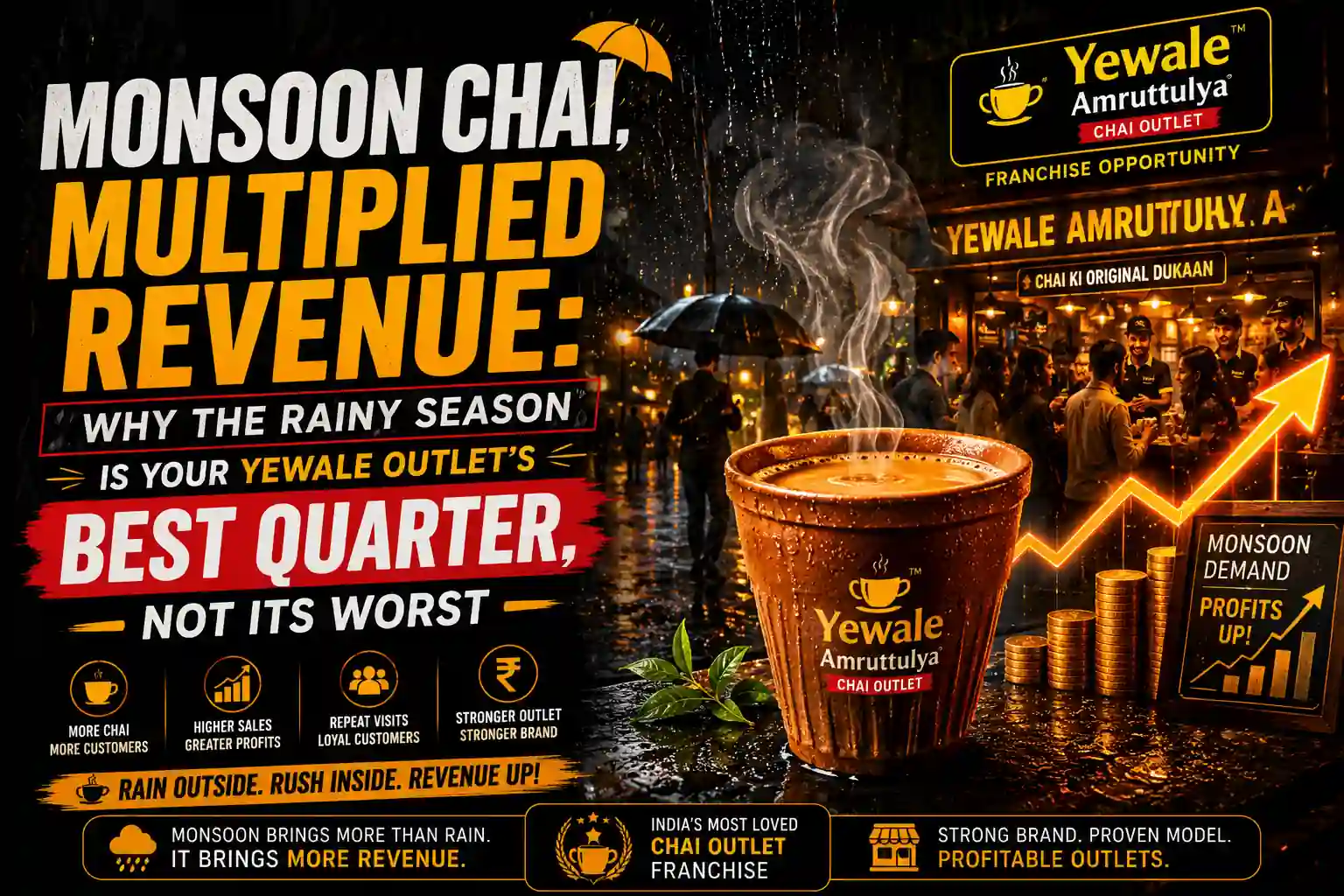
The Outlet Owner Who Used to Dread the Rain
Ashwini runs a Yewale outlet in a busy Pune lane, and for her first two monsoons as a franchisee, she treated the rainy season the way most small food business owners do: as something to survive. Fewer people walking past the counter. Slower afternoons. A vague sense that revenue would dip until October arrived and the skies cleared.
Her third monsoon looked different, because she changed one thing. Instead of just keeping the shutter half-down and waiting out the rain, she moved her Bakarwadi and Cream Roll display closer to the entrance, put up a simple rain cover over two extra stools, and made sure her Soundbox and delivery listing were both live before the first heavy showers hit in June. Customers who stepped in to escape the rain for five minutes started staying for fifteen. Many of them ordered a snack they might have skipped on a dry day. Her delivery orders, which barely existed the year before, started arriving steadily from nearby offices who did not want to step out at all.
By August, Ashwini's daily revenue on rainy days was higher than on clear days, not lower. She had not added a single new product to her menu. She had simply stopped treating the monsoon as a problem and started treating it as the season her outlet was built for.
The Monsoon Is No Longer India's Lean Season for Food and Beverage
For years, restaurants and cafés planned their year around the monsoon dip. That assumption is now outdated. India's organised foodservice market is projected to reach USD 150 billion by 2030, and industry data shows the rainy season has shifted from a period of lower footfall to one of the highest-revenue windows of the year, driven by comfort food demand, cosy indoor dining, and a sharp rise in digital ordering. Customers who do step out during rain tend to stay longer once they are inside, and that longer stay converts directly into higher spending.
The specific numbers make the case clearly. Customers who stay longer during rainy weather typically spend 20% to 30% more through additional beverage and snack orders, because a five-minute stop becomes a proper sit-down once the rain outside makes leaving unappealing. At the same time, heavy rainfall pushes a meaningful share of customers to order in rather than step out at all, and food delivery orders during heavy rain periods commonly rise by 15% to 30% compared with dry-weather days. For a Yewale outlet, this means the monsoon does not shrink the customer base; it splits it into two groups who both spend more than usual, dine-in customers staying longer, and delivery customers ordering who would not have visited at all.
| Monsoon Data Point | Figure | Source |
|---|---|---|
| India organised foodservice market, projected 2030 | Rupees 150 billion | Restaurant India |
| Extra spend from customers who dine in longer during rain | 20% - 30% more via beverage and snack add-ons | Restaurant India |
| Rise in food delivery orders during heavy rainfall | 15% - 30% higher than dry-weather days | Restaurant India |
| India tea market value, 2025 to 2033 | Rupees 12.14 billion growing to Rupees 20.46 billion, 6.8% CAGR | Grand View Research |
The GST Change That Quietly Helps Every Chai Counter in 2026
A less talked about tailwind is sitting in the tax structure itself. Following the GST Council's rate restructuring effective September 22, 2025, tea and coffee extracts moved from 18% GST down to 5%, and standalone food outlets like a Yewale counter continue to be taxed at the simplified 5% rate on dine-in and takeaway. This keeps the cost of running a hot-beverage-led outlet lower than it would be under the older, more fragmented slab structure, and it keeps chai an affordable, low-friction purchase for a customer who has just stepped in out of the rain. A lower, simpler tax rate on the core product is one more reason the economics of a monsoon rush favour a tea outlet more than most other food categories.
Why Snacks and Chai Work Even Harder When It's Raining
The comfort-food effect that drives monsoon spending is not generic; it favours exactly the kind of warm, familiar, affordable pairing a Yewale counter already sells. A customer sheltering from rain is not looking for a light, quick bite; they want something warm, filling, and a little indulgent, which is precisely the role Bakarwadi, Cream Roll, and Spongy Cake play alongside a hot cutting chai. This is the same snack-and-chai revenue relationship covered in Yewale's snacking playbook, and the monsoon simply amplifies it, because dwell time is already longer and appetite for something warm and comforting is already higher before the customer even reaches the counter.
This is also where a fully working digital payment setup pays for itself during the season. A customer stepping in briefly to escape the rain does not want to wait for change, and a customer ordering delivery during a downpour is, by definition, paying digitally. An outlet that already has its QR code, Soundbox, and delivery listing live before the season starts captures both kinds of monsoon customer without any friction at the counter.
The Monsoon Readiness Checklist for a Yewale Outlet
- Move the snack display slightly forward and keep it fully stocked before the two rain-driven rush windows: mid-morning and early evening, when people step in to wait out a shower.
- Add a simple rain cover or a couple of covered stools near the entrance if space allows, so customers who came in only to shelter have a reason to sit and order rather than leave.
- Confirm the outlet's Swiggy or Zomato listing is active and accurate before the season peaks, since delivery demand rises fastest in the first heavy weeks of the monsoon.
- Keep the QR code and Soundbox visible and working at all times; a rain-soaked customer paying digitally should never have to search for where to scan.
- Track rainy-day sales separately from clear-day sales for a few weeks, so the outlet has real numbers instead of the old assumption that rain means lower revenue.
Rain-Special Combo Pricing: A Small Menu Nudge With an Outsized Effect
A simple seasonal nudge many outlets overlook is a named combo for the season itself, a chai-and-snack pairing priced and displayed specifically for rainy days. It does not require new products or new suppliers. It requires reframing an existing pairing, chai with Bakarwadi or chai with a Cream Roll, as the obvious choice for the weather outside. Naming a combo for the moment a customer is standing in tends to convert hesitation into an order faster than a generic menu board does, particularly when the customer has just walked in wet and is deciding quickly.
Key Takeaways
- The monsoon has shifted from a lean season to a high-revenue window for food and beverage outlets, with India's organised foodservice market projected to reach USD 150 billion by 2030.
- Customers who dine in during rain spend 20-30% more through longer stays and extra orders, while delivery orders rise 15-30% during heavy rainfall.
- The GST rate cut on tea and coffee to 5%, effective September 2025, keeps a chai-led outlet's core product tax-efficient going into the season.
- Snacks like Bakarwadi and Cream Roll pair even more naturally with chai during monsoon, when comfort-food demand is at its highest.
- A working QR code, Soundbox, and active delivery listing capture both the longer-staying dine-in customer and the rain-avoiding delivery customer without added friction.
- A simple, named rain-season combo can convert a quick shelter-stop into a paid order faster than a standard menu board.
Ashwini no longer checks the weather forecast to worry about her footfall. She checks it to know when to restock the snack counter.
If the next heavy rain outside your outlet is actually your busiest hour of the week, is your counter set up to make the most of it, or just to wait it out?
