
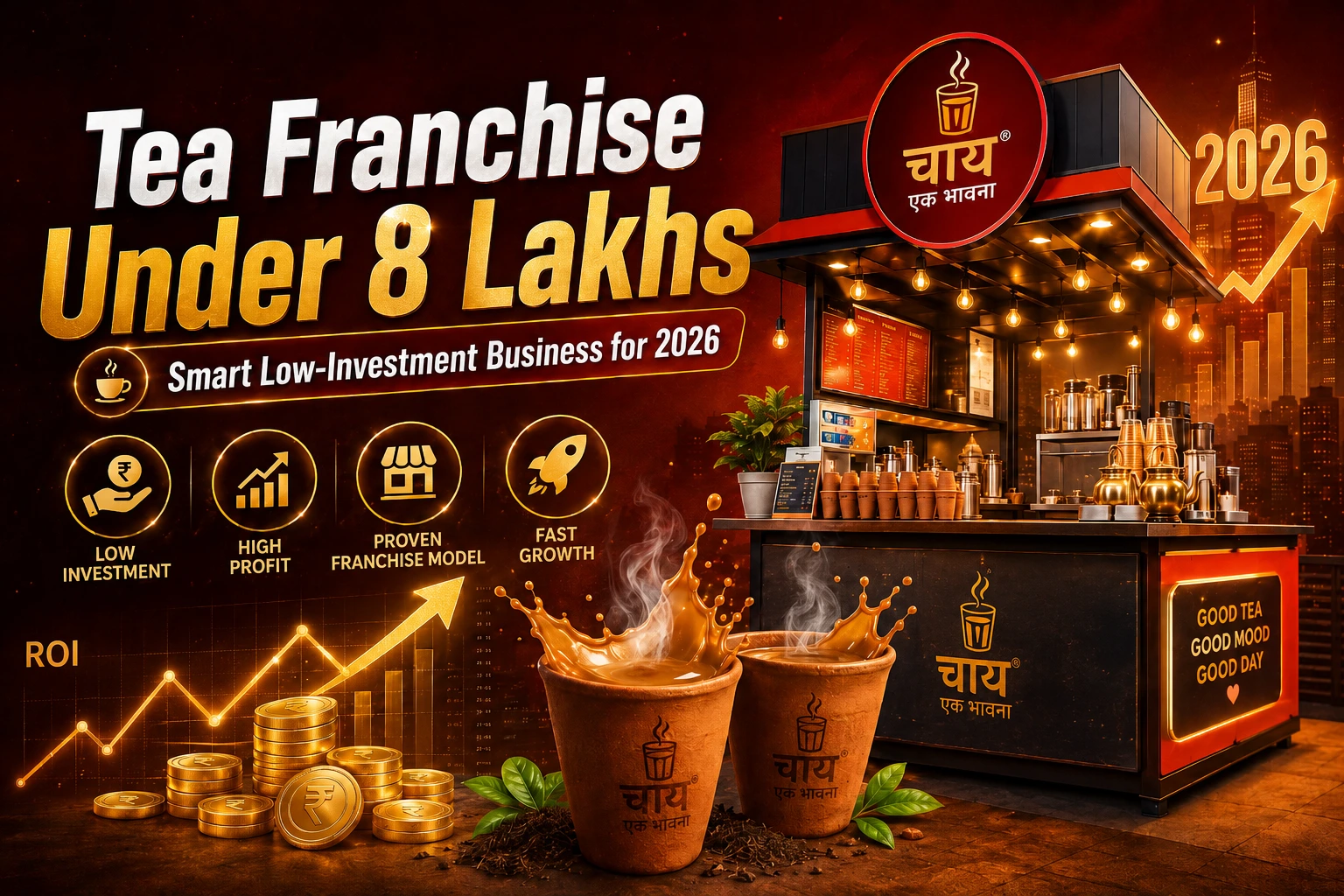
He Had ₹8 Lakhs, a Dream, and No Idea What to Do With Either
Rajesh was a 34-year-old from Nashik. He had spent 10 years working in a private firm, saved up close to ₹8 lakhs, and spent months thinking about what to do with it.
He looked at starting his own restaurant. The estimates came back at ₹20 to 30 lakhs minimum, before he had served a single customer.
He looked at a clothing store. High inventory risk. Seasonal demand. No expertise.
He thought about a juice stall. Too small. No brand support. Everything from scratch.
Then a friend told him about a tea franchise. His first reaction was skepticism. Chai? As a business? People buy chai from every corner tapri in India.
Six months after opening his Yewale Amruttulya outlet in Nashik, Rajesh was pulling in over ₹1 lakh in net profit per month. His entire investment had been recovered before his first anniversary.
Here is what most people do not understand: starting a tea business from scratch and joining a proven tea franchise are two completely different decisions. The investment looks similar. The outcomes are not.
This blog explains exactly why a tea franchise under 8 lakhs is one of the most intelligent low-investment business decisions available in India in 2026, and what you need to know before you make it.
The Math That Most Business Comparison Articles Get Wrong
When people compare low-investment business options in India, they almost always focus on the entry cost. How much do I need to start? That is the first question but it is not the most important one.
The more important questions are: How quickly will I recover my investment? How much will I earn monthly after operating costs? And how likely is this business to still be running in five years?
When you run those numbers across different business categories, tea franchises come out ahead in almost every column.
The Survival Rate Nobody Talks About
According to research cited by Franchise Neighborly, only about 4% of franchises fail within the first five years. Compare that to independent startups, where nearly 50% fail in the same timeframe. That is not a small gap. That is a fundamental difference in risk profile.
The Small Business CEO research platform confirms: 92% of franchise placements remain operational after two years, compared to a significantly lower rate for independent businesses. The reason is not luck. It is structure.
A franchise gives you a proven product, an established supply chain, a trained operational system, and a customer base that already trusts the brand name before you open your door. An independent business requires you to build every single one of those from scratch, at your own cost, on your own timeline, with your own money at risk.
Why Tea Specifically Beats Other Low-Investment Options
The Yewale Amruttulya franchise data and broader industry research show that tea franchises achieve profit margins of up to 50%. Raw material cost per cup runs as low as ₹2 to 3. Retail price runs ₹15 to 20. That markup is one of the strongest in any food and beverage category at this investment level.
Compare that to other businesses in the same investment bracket:
- Juice or smoothie stall: High perishability risk. Seasonal demand. Cold chain dependencies. Margins thinner than tea.
- Snack counter or fast food kiosk: Requires preparation, training, consistent cooking quality. Slower morning traffic.
- Courier pickup point: Predictable but low margins. Revenue depends heavily on e-commerce volume in your pin code.
- Mobile repair shop: Skill-dependent. Requires trained technician. Limited by customer device cycles.
- Tea franchise under 8 lakhs: Daily consumption product. 88% household penetration. Zero royalty. No cooking required. Cultural demand built in.
Franchise vs. Starting a Tea Stall From Scratch: A Honest Comparison
A lot of people think opening their own chai stall is the cheaper option. And the entry cost might be lower on paper. But that comparison only holds if you count the money you spend, not the value you miss.
| Factor | Independent Tea Stall | Tea Franchise Under 8L | Verdict |
| Brand trust | Build from zero | 40 years of goodwill | Franchise wins |
| Time to first customer | Weeks to months | Day one of opening | Franchise wins |
| Recipe and consistency | Depends on owner skill | Centrally standardized | Franchise wins |
| Training and support | None | Full setup + ongoing | Franchise wins |
| Royalty cost | None | 0% at Yewale | Tie |
| Break-even timeline | 12 to 36 months | 6 to 18 months typically | Franchise wins |
| Risk of failure (5 yrs) | Nearly 50% fail | Only ~4% fail | Franchise wins |
| Menu development | Owner responsibility | 25+ tested products | Franchise wins |
| Snack revenue system | None | Pre-standardized snacks | Franchise wins |
The table shows something that is easy to miss when you only look at the upfront cost. A tea franchise does not just give you a business. It gives you years of someone else's learning, packaged into a system that you can start using on day one.
The Hidden Cost of Starting From Zero
Here is what most people never account for when they plan an independent tea stall. The cost of the learning curve.
You will experiment with recipes for weeks before finding the right balance. You will have inconsistent taste across batches while your staff settles in. You will spend money on marketing just to get your first 50 regulars. You will waste ingredients during the early weeks when demand is unpredictable. You will figure out supplier relationships through trial and error.
All of that costs money. And none of it shows up in your initial investment estimate.
A franchise eliminates every single one of those learning costs because the brand has already paid them. The recipe is set. The supply chain is running. The training system exists. The brand name opens the door for you before you even unlock your outlet.
What a Tea Franchise Under 8 Lakhs Actually Buys You
Let us be specific about value. When you invest in a tea franchise at this level, here is what that money gets you, and what it would cost to build the equivalent from scratch.
| What You Get for Under ₹8 Lakhs | What It Would Cost to Build This Yourself |
| 40+ years of brand recognition | 5 to 10 years minimum to build local trust |
| 25+ tested and proven menu items | ₹2 to 5 lakhs in product R&D and testing alone |
| Centralized supply chain and ingredients | Sourcing contacts, supplier negotiations, quality risks |
| Full outlet setup support | Interior designer, contractor, equipment sourcing costs |
| Staff training system | Trial and error for months, inconsistent quality |
| Pre-standardized snacks ready to sell | Kitchen equipment, trained baker, daily prep costs |
| Zero royalty, 100% profit yours | Standard franchise royalty: 5% to 10% of all revenue |
| Immediate customer footfall on day one | 3 to 6 months of marketing spend to build awareness |
The right column in that table is what most people never calculate. Building brand trust from zero takes years. Developing a 25-item menu that customers actually want takes significant investment in product testing. Setting up a reliable supply chain takes months of supplier sourcing. Figuring out a training system takes operational experience you may not have yet.
A tea franchise under 8 lakhs bundles all of that into one investment. And in Yewale Amruttulya's case, it does so with a zero-royalty model, which means none of your revenue goes back to the brand. Every rupee you earn from your outlet is yours to keep.
What most people do not realize is this: the real cost of starting from scratch is not what you pay to open. It is what you pay to survive the first 12 to 18 months while you figure out what works. A franchise skips that entirely.
The Revenue and ROI Picture: Real Numbers from a Tea Outlet
Here is a realistic revenue projection for a well-positioned Yewale outlet in a mid-sized city, based on a modest daily footfall of 250 to 300 customers.
| Revenue / Cost Item | Daily (Est.) | Monthly (Est.) | Annual (Est.) |
| Chai sales (250 cups @ ₹18 avg) | ₹4,500 | ₹1,35,000 | ₹16,20,000 |
| Snack sales (85 items @ ₹22 avg) | ₹1,870 | ₹56,100 | ₹6,73,200 |
| Total gross revenue | ₹6,370 | ₹1,91,100 | ₹22,93,200 |
| Operating costs (rent, staff, supplies) | ₹2,800 | ₹84,000 | ₹10,08,000 |
| Net monthly profit (estimate) | ~₹1,07,000 | ~₹12,84,000 | |
| Break-even on ₹8L investment | ~7 to 9 months |
The numbers above assume a conservative location with moderate footfall. Outlets in high-traffic areas near colleges, offices, or markets routinely exceed these figures. And the key metric to notice is the break-even timeline: 7 to 9 months.
Industry data confirms this range. According to franchise research cited by Yewale's own blog, 60% of tea franchisees recover their initial investment within 18 months. For a well-run outlet in a strong location, 6 to 12 months is achievable.
The Zero-Royalty Multiplier
Most franchises in India charge 5% to 10% of your monthly revenue as royalty. On ₹1,91,100 monthly revenue, that is ₹9,500 to ₹19,100 per month flowing back to the brand, every single month, for as long as you operate. Over a year, that is ₹1.14 lakh to ₹2.29 lakh that never hits your pocket.
At Yewale Amruttulya, the royalty is zero. That money stays with you. Compounded across three to five years of operation, the zero-royalty model is worth more than most people realize when they first look at a franchise investment.
Why 2026 Is Specifically a Good Year to Start a Tea Franchise in India
Timing matters in business. And several things are converging in 2026 that make this a particularly good moment to enter the tea franchise space.
The Organized Tea Café Segment Is Still in Early Growth
Despite India consuming over 1 billion kilograms of tea per year, organized tea cafés still account for a small fraction of the out-of-home tea market. The India cafes and bars market was valued at USD 18.83 billion in 2025 and is expected to reach USD 31.47 billion by 2031, growing at 8.92% annually. The organized tea café and franchise segment sits inside a market that is expanding every year but is still far from saturated.
Tier 2 and 3 Cities Are Underserved and Growing Fast
Over 65% of new profitable tea franchise outlets in 2024 and 2025 opened in Tier 2 and Tier 3 cities. These cities have lower rent, less competition from organized brands, and a deeply chai-drinking population that currently has few quality branded options. If you are based in a city like Nashik, Aurangabad, Kolhapur, Jalgaon, or any similar city, you are looking at exactly the market conditions that reward early movers.
The Franchise Industry Itself Is Growing at 30% Annually
The India franchise industry is valued at around INR 800 billion and growing at 30% to 35% per year according to the FranCast Whitepaper 2023-24. There are currently 4,600 active franchisors running nearly 2 lakh outlets across India. The infrastructure for franchising: supply chains, training systems, legal frameworks, and financing support, has never been more developed than it is right now.
Tea Consumption Habits Are Strengthening, Not Weakening
The India tea market reached USD 12,140 million in 2025 and is growing at a CAGR of 6.8% through 2033. This is not a market in decline. It is a market that is growing while simultaneously organizing itself into branded, franchise-driven formats. The window to enter as an early-ish mover with a strong brand is open right now.
Who Should Seriously Consider This?
A tea franchise under 8 lakhs is not the right choice for everyone. But it is specifically a very strong option for certain types of people.
- First-time entrepreneurs: If you have never run a business before and want a model that guides you through setup and operations without leaving you to figure everything out alone, a franchise structure is designed for you.
- Salaried employees planning to exit: If you have saved ₹7 to 10 lakhs from years of employment and want to convert that into a monthly income stream, a tea franchise gives you a predictable revenue model from month one.
- Entrepreneurs in Tier 2 and 3 cities: If you are based in a city where no major tea brand has established strong presence, you have a genuine first-mover advantage that compounds over time as the brand expands nationally.
- Investors looking for a second income: A well-staffed tea outlet can run with minimal daily involvement from the owner after the initial setup period, making it a viable second-income business for those with other commitments.
- Former food and beverage workers: If you have worked in a restaurant, canteen, or food business and understand daily operations, a tea franchise gives you that expertise a proven brand and zero-royalty income model to work with.
Ready to start your own tea business with a proven model behind you? Explore the Yewale Amruttulya tea franchise under 8 lakhs and see what 40 years of chai expertise can do for your income.
What to Look for Before You Sign a Franchise Agreement
Not all franchises are created equal. Before you commit your savings to any franchise at any price, here are the questions that every smart investor should ask.
Is There a Royalty Fee? How Much?
Most franchises charge 5% to 10% of your monthly revenue as royalty. Over a year, this can be a significant drain on your profit. Always calculate the royalty impact over 12, 24, and 36 months before comparing two franchise options by investment cost alone.
What Does the Support System Actually Cover?
Some franchises offer 'full support' that amounts to a manual and a phone number. The best franchises provide hands-on location selection guidance, setup support, staff training, supply chain access, and ongoing operational help. Know exactly what you are getting before you pay.
How Standardized Is the Product?
Consistency is the lifeblood of any food or beverage franchise. If the product quality depends heavily on local staff skill, you will spend significant time and money on quality control. Pre-standardized products, like centrally supplied snacks and recipe-controlled beverages, remove that dependency entirely.
What Is the Real Break-Even Timeline for Existing Outlets?
Ask to speak with existing franchisees, not just the ones the brand showcases in its marketing. Get honest answers about how long it took them to recover their investment and what the first six months actually looked like financially.
Does the Brand Have Room to Grow in Your City?
A brand that is already saturating your city will give you less benefit from the brand recognition. A brand that is actively expanding into your city and has a planned growth roadmap gives you the combined advantage of early presence and brand momentum.
Key Takeaways
- Franchise vs. startup survival: Only 4% of franchises fail within five years. Nearly 50% of independent startups fail in the same period. The risk difference is significant.
- Tea profit margins: Tea franchises achieve up to 50% profit margins on beverages, with raw material costs as low as ₹2 to 3 per cup and retail prices of ₹15 to 20.
- Break-even timeline: A well-run tea outlet in a good location can recover an ₹8 lakh investment in 7 to 12 months, with 60% of franchisees recovering investment within 18 months.
- Zero royalty matters more than people think: A franchise that takes 8% royalty costs you ₹1.5 to 2.3 lakh per year on a typical outlet's revenue. Over five years, that is ₹7 to 11 lakh that never reaches your pocket.
- 2025 market timing: The organized tea café segment is growing at 8.92% annually. Tier 2 and 3 cities are underserved. The franchise industry itself is growing at 30% per year. All three trends point in the same direction.
- The real investment value: Under ₹8 lakhs buys you 40 years of brand trust, a 25-item tested menu, a centralized supply chain, zero-royalty income, and an operational system built to make a first-time owner successful.
Rajesh from Nashik figured this out six months into his franchise. The question he asks now is not 'Was ₹8 lakhs worth it?' It is 'Why did I spend so long thinking about it?'
The math was always in his favor. It just needed someone to show him the full picture.
If you had ₹8 lakhs and 12 months to build a business that generates ₹1 lakh or more per month, what would be stopping you from starting today?
