
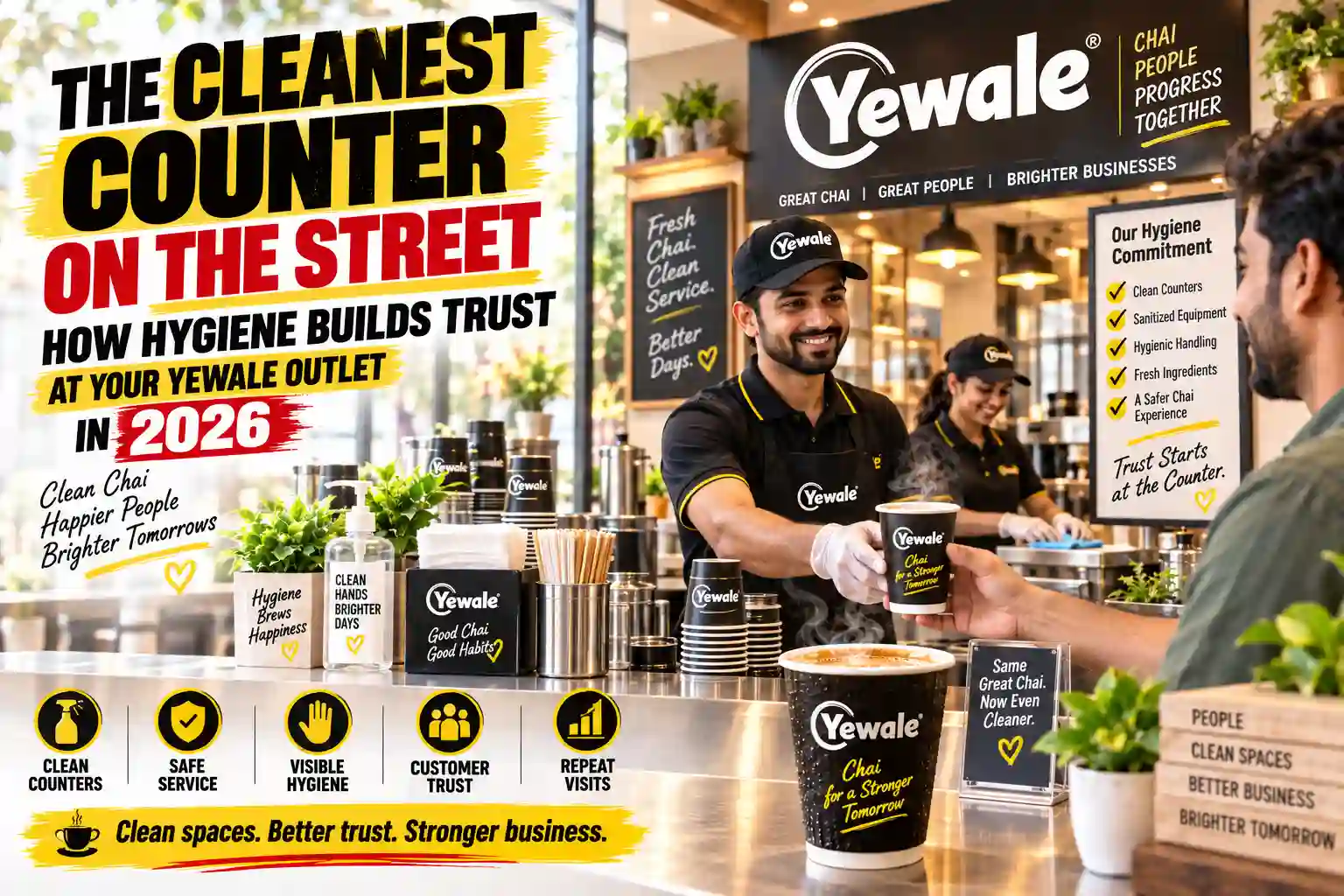
A Cleaner Counter Can Change the First Impression
Consider a customer approaching two nearby chai outlets during a busy office break. Before tasting anything, the customer can already see the counter, staff presentation, food display, serving cups and overall condition of the premises.
At a well-maintained Yewale Amruttulya outlet, a clean counter, organised product display, covered food items, clean serving ware and disciplined staff presentation can immediately communicate care and consistency.
That does not mean cleanliness alone guarantees a sale or customer loyalty. It does mean that visible hygiene removes a major source of hesitation and supports the trust that a branded food-and-beverage outlet is expected to maintain.
Yewale Amruttulya’s wider menu includes Regular Tea, Kulhad Chai, Jaggery Tea, Black Tea, Ginger Tea and snacks such as Bakarwadi, Cream Roll, Cookies and Spongy Cake. Keeping each beverage and snack cleanly prepared, stored and presented is part of delivering a consistent customer experience.
This guide explains practical daily and weekly hygiene routines, visible trust signals, food-handler practices, FSSAI readiness and ways to connect cleanliness with the Yewale brand experience.
Why Hygiene Matters Beyond Basic Compliance
FSSAI’s Hygiene Rating Scheme is designed to encourage food businesses to improve hygiene and safety standards and to help consumers make informed choices about food outlets. The scheme applies to food-service establishments and requires participating businesses to maintain an active FSSAI licence or registration, follow Schedule 4 requirements and display Food Safety Display Boards.
For official guidance, see the FSSAI Hygiene Rating Scheme and the FoSCoS Schedule 4 and inspection resources.
This is useful for a Yewale outlet because hygiene is both an operational requirement and a visible part of the customer experience. A clean food-preparation area, clearly displayed food-safety information and disciplined staff practices make it easier for customers to understand that the outlet follows an organised system.
Daily Hygiene Routine for a Yewale Tea Outlet
Cleaning should be treated as a scheduled operating process rather than an occasional deep-cleaning exercise. The exact timing can be adapted to outlet hours and local operating conditions.
| When | What to Clean or Check | Operational Purpose |
| Before opening | Clean food-contact surfaces and counter; confirm utensils and vessels are clean; wash hands; check serving cups and product display. | Start the day with clean contact surfaces and an organised service area. |
| After rush periods | Clear used disposables; wipe spills; clean the counter and service zone; check floor condition. | Prevent food residue, clutter and spills from accumulating during high-volume periods. |
| Midday / quieter period | Clean brewing equipment as required; wipe storage and display surfaces; check packaged snack condition and expiry. | Maintain cleanliness during the full service day instead of waiting until closing. |
| Before closing | Clean and sanitise appropriate surfaces; cover or store ingredients correctly; remove waste; clean floor and equipment. | Reduce overnight contamination and pest risk. |
| Staff close-down | Wash hands; store aprons and cleaning cloths appropriately; record any maintenance or pest issue noticed. | Create accountability and make the next shift easier to start correctly. |
FSSAI hygiene-rating checklists specifically evaluate premises cleanliness, equipment condition, cleaning schedules and the absence of stagnant water in food zones. A simple written cleaning checklist can therefore support both day-to-day discipline and inspection readiness.
Weekly and Periodic Hygiene Checks
| Frequency | Check | What to Look For |
| At least weekly | Deep-clean hard-to-reach surfaces, equipment bases, shelves and storage corners. | Residue, dust, grease, moisture or areas missed during normal service cleaning. |
| Several times a week | Inspect floors, drains and waste areas. | Standing water, odour, leakage or conditions that could attract pests. |
| Weekly | Review packaged snack stock using FIFO principles. | Damaged packs, open packs, expired or near-expiry stock. |
| Weekly | Inspect refrigerators or cold-storage equipment, if used. | Cleanliness, door seals, thermometer function and temperature appropriate to stored food. |
| Ongoing | Look for signs of pest activity and keep relevant pest-control records. | Droppings, insects, gnawing, damaged packaging or entry points. |
| As applicable | Review water source and water-quality records. | Use potable water and maintain testing/municipal supply records required for the outlet. |
FSSAI’s hygiene audit criteria include hygienic premises, protection from dirt and pests, potable water, cleanable equipment, cleaning programmes, pest control and food-handler hygiene. The exact records required can depend on the outlet’s licence category, water source and operation.
Visible Hygiene Signals Customers Can Understand
| Visible Signal | Why It Helps |
| FSSAI licence/registration and Food Safety Display Board in the required location | Makes food-safety information accessible and supports transparency. |
| Clean uniforms or aprons | Shows that personal hygiene and food service are being managed deliberately. |
| Covered and organised snack display | Helps protect products from dust, handling and environmental exposure. |
| Clean serving cups and utensils stored properly | Reduces visible contamination concerns at the point of service. |
| Handwashing facility and/or appropriate hand-hygiene arrangement | Supports correct staff hygiene before and during food handling. |
| Clean floor, counter and immediate outlet surroundings | Makes the outlet look maintained rather than reactive to cleaning only after problems appear. |
| Separate, clean cloths and cleaning tools for designated uses | Reduces cross-use of visibly dirty cleaning materials around food-contact areas. |
When displaying Yewale snacks such as Bakarwadi, Cream Rolls, Cookies and Spongy Cakes, keep packaged products protected, organised and within their stated storage and shelf-life requirements. The presentation should reinforce the same standard customers expect from the beverage counter.
Staff Hygiene: Five Non-Negotiable Habits
Wash hands with soap at appropriate times, including before food handling, after breaks, after using the washroom and after activities that can contaminate hands.
Wear clean clothing or protective workwear appropriate to the food-handling task. Replace visibly soiled aprons or garments.
Avoid touching ready-to-serve food after handling cash or other potentially contaminated surfaces without proper hand hygiene.
Keep nails and personal hygiene maintained, avoid loose jewellery in food-preparation areas, and follow outlet rules for hair restraints or protective equipment where required.
Maintain food-handler medical examination and health records required under applicable FSSAI hygiene requirements.
Current FSSAI Hygiene Rating audit criteria include annual medical examination records, personal cleanliness, handwashing, avoidance of loose jewellery and suitable protective clothing such as aprons or headgear where necessary.
FSSAI Inspection Readiness: Keep the Basics Organised
Instead of trying to prepare only when an inspection is expected, maintain basic food-safety documents and operating records as part of normal outlet management.
| Item | What to Keep Ready |
| FSSAI licence / registration | Current licence or registration and required display information at the outlet. |
| Food Safety Display Board | Applicable FSDB displayed in a prominent, readable position as required. |
| Cleaning records | Simple dated cleaning schedule or checklist for premises and equipment. |
| Food-handler records | Applicable medical examination, training and hygiene records. |
| Pest-control records | Service records and internal observations where pest-control measures are used. |
| Water records | Relevant potable-water or testing records depending on source and applicable requirements. |
| Stock and storage checks | Evidence that products are covered, stored correctly and managed within expiry / shelf-life limits. |
Do not rely on a generic penalty table copied from third-party websites. Enforcement depends on the specific provision, type of non-compliance, licence status and action taken by the competent authority. For licence, inspection and Schedule 4 information, use the current FoSCoS/FSSAI resources or obtain professional compliance advice for the specific outlet.
How Hygiene Supports the Yewale Brand Experience
Yewale Amruttulya positions its franchise model around standardisation, a chef-less operating process, product variety and consistent taste across outlets. That consistency should extend beyond the recipe to the way the counter, equipment, staff and products are maintained.
The official Yewale Amruttulya franchise opportunity page describes a chef-less, owner-free model with standardisation across outlets and a 0% royalty and commission structure.
For a franchise owner, the practical goal is simple: a customer should encounter the same sense of organisation whether they are ordering Regular Tea, Ginger Tea, Jaggery Tea, Kulhad Chai or a snack.
Customers can explore the complete Yewale Amruttulya product range, while franchisees can use the Yewale store locator to understand the brand’s growing outlet network.
Use Hygiene in Marketing Without Making Unsupported Claims
Cleanliness can be shown in marketing, but avoid absolute statements such as “100% germ-free,” “zero contamination,” or “safer than every other outlet” unless they are supported by appropriate evidence.
Use real photographs of a clean counter, covered product display and organised service area on your Google Business Profile.
Show staff following normal hygiene practices in outlet Reels and Stories rather than staging exaggerated medical-style claims.
Keep delivery packaging clean, closed and appropriate for the product.
For corporate or bulk enquiries, communicate reliability, product quality and organised service rather than making unverifiable hygiene comparisons.
Yewale’s official products page confirms that bulk orders for tea, beverages and snacks are available for corporate events, gatherings and other occasions. For business partnerships or product enquiries, use the Yewale Amruttulya contact page.
Considering a Yewale Amruttulya Franchise?
Hygiene discipline works best when it is built into an organised operating system from the beginning. Prospective franchise partners should review the current Yewale model, location requirements, training, setup and operating support before making an investment decision.
Explore the Yewale Amruttulya franchise opportunity and the current Yewale premium franchise investment model. Yewale’s current official page states that initial investment for the premium model starts around ₹8.2 lakh, with final cost varying by store size, design and location-specific requirements.
You can also read about the Yewale Amruttulya brand journey and legacy or contact Yewale for franchise and business enquiries.
Key Takeaways
Visible cleanliness supports customer confidence, but avoid presenting hygiene as a guarantee of sales, loyalty or higher spending.
Use a written daily and weekly cleaning routine so hygiene does not depend on memory or the owner being physically present.
Display required FSSAI information and keep food-safety records organised as part of normal operations.
Staff hygiene matters as much as counter hygiene: clean workwear, handwashing, appropriate food handling and required medical records should be standard practice.
Keep Yewale beverages and snacks cleanly stored and presented so product quality and outlet presentation support each other.
Use official FSSAI/FoSCoS sources for compliance questions rather than relying on penalty figures or inspection claims from third-party blogs.
Link hygiene communication back to the Yewale brand experience: standardisation, organised operations, consistent products and reliable service.
A clean counter is not a one-time campaign. It is the result of repeated operating habits: cleaning on schedule, storing products correctly, training staff, keeping records and fixing small problems before customers have to notice them.
Reference Links
FSSAI - Hygiene Rating Portal / Audit Checklists
FSSAI FoSCoS - Schedule 4 Requirements and Inspection Resources
FSSAI - Food Safety Display Boards / Food Safety Guidance
